

How Long Does It Take to Reach B2 or C1 English?
One of the most common questions English learners ask is: “How long will it take me to reach B2 or C1 English?”
Sometimes the question is simply, “When will I finally feel fluent?” It’s a natural question—but there isn’t a single answer.
Learning English isn’t a race. Everyone starts from a different point, learns at a different pace, and has different goals. Your progress depends on many factors, including your current level, how often you study, how much English you use outside the classroom, and how actively you practise speaking. The good news is that every step forward brings you closer to using English with greater confidence.
What Are B2 and C1 English Levels?
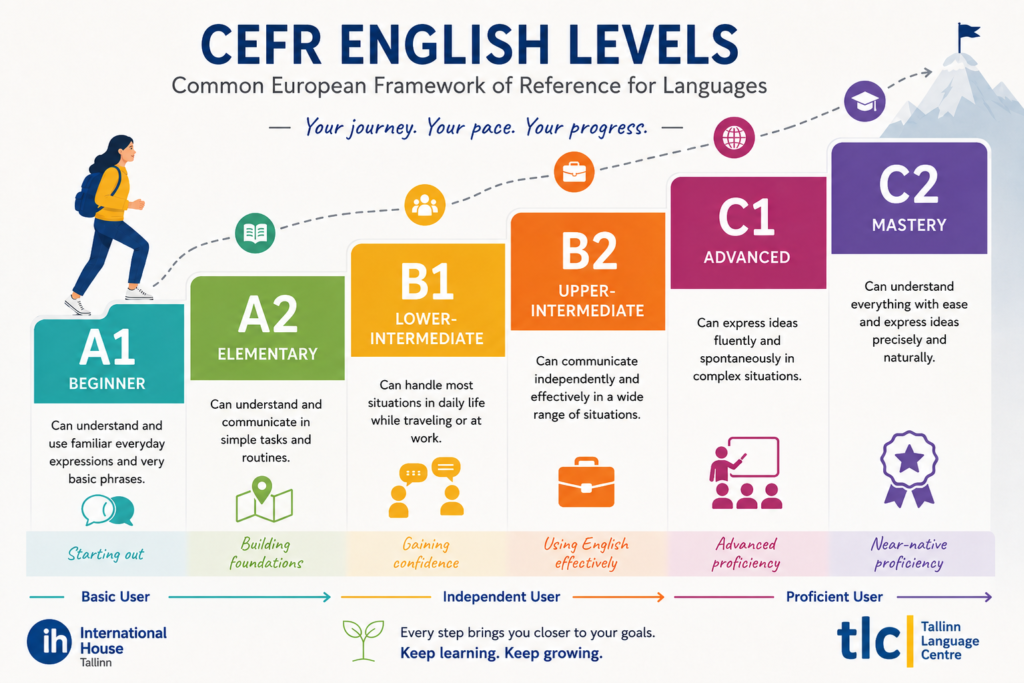
The CEFR (Common European Framework of Reference for Languages) is an internationally recognised system used to describe language ability. It helps learners understand what they can do at each stage of their learning journey.
B2 English – Upper-Intermediate
Reaching B2 English is a significant milestone. Many learners find that this is the point where English becomes a practical part of everyday life rather than something they only study in class.
At B2 level, you can:
- communicate confidently in most everyday situations
- understand the main ideas of articles, meetings, and conversations
- express your opinions clearly and explain your ideas
- write emails, reports, and other structured texts
- use English comfortably for work, travel, and social situations
For many employers and universities, B2 is considered a solid working level of English.
C1 English – Advanced
A C1 English learner can communicate naturally and confidently in almost any professional, academic, or social situation.
At this level, you can:
- speak fluently with very little hesitation
- understand complex texts and discussions
- use a wide range of vocabulary accurately
- adapt your language to different audiences and situations
- study or work successfully in an English-speaking environment
C1 isn’t about speaking perfect English. It’s about being able to communicate effectively and confidently in demanding real-life situations.
What Affects Your Progress?
There is no fixed timetable for reaching B2 or C1. However, several factors make a real difference.
Your Starting Point
Someone who already has a good foundation will naturally progress differently from someone starting as a beginner.
That’s why taking a placement test before joining a course is so important. It helps you choose the right level and gives you realistic expectations from the beginning.
Learning Regularly
Consistency is one of the biggest factors in successful language learning. Studying a little every week is usually much more effective than studying intensively for a short period and then stopping altogether. Regular lessons, together with independent practice, help you build your skills steadily over time.
Speaking as Much as Possible
Many learners understand English much better than they can speak it. Building confidence comes from using the language regularly. Every conversation helps improve your fluency, pronunciation, vocabulary, and ability to respond naturally. That’s why speaking plays such an important role in every successful English course.
The Quality of Your Course
Not all language courses are the same. A well-designed English course should help you develop all four language skills:
- speaking
- listening
- reading
- writing
Most importantly, it should prepare you to use English in real situations—not simply memorise grammar rules or vocabulary lists.
Using English Outside the Classroom
The more English becomes part of your daily life, the faster you’ll feel progress. Simple activities can make a real difference, such as:
- reading articles or books
- watching films or TV series in English
- listening to podcasts
- following English-language social media
- speaking English whenever you have the opportunity
Small amounts of regular exposure add up over time.
How Can You Improve Faster?
Although everyone learns differently, successful learners often have similar habits. They:
- study at the right level
- attend lessons regularly
- practise speaking whenever possible
- build vocabulary naturally through reading and listening
- use English outside the classroom
- set realistic goals and celebrate their progress
The key isn’t studying harder—it’s studying consistently.
Should You Aim for B2 or C1?
Your goal should reflect why you’re learning English.
B2 may be the right choice if you want to:
- communicate confidently while travelling
- use English at work
- work with international colleagues or clients
- participate comfortably in everyday conversations
C1 may be the better goal if you plan to:
- study at university in English
- develop an international career
- give presentations and negotiate confidently
- write professional or academic documents
- communicate at an advanced professional level
Whatever your goal, reaching a higher level is a journey that happens one step at a time.
Every Learner’s Journey Is Different
There isn’t a shortcut to B2 or C1 English, and there isn’t a single timetable that suits everyone.
What makes the biggest difference is combining high-quality teaching with regular practice and making English part of your everyday life. Learners who stay motivated, attend lessons consistently, and actively use the language often discover that their confidence grows naturally alongside their skills.
At Tallinn Language Centre / International House Tallinn, our English courses follow the CEFR levels and focus on practical communication from the very first lesson. Whether your goal is to improve your English for work, university, international exams, or everyday life, our experienced teachers will help you progress with confidence.
With the right course, clear goals, and regular practice, reaching B2 or C1 English is an achievable goal—and we’re here to help you get there.